
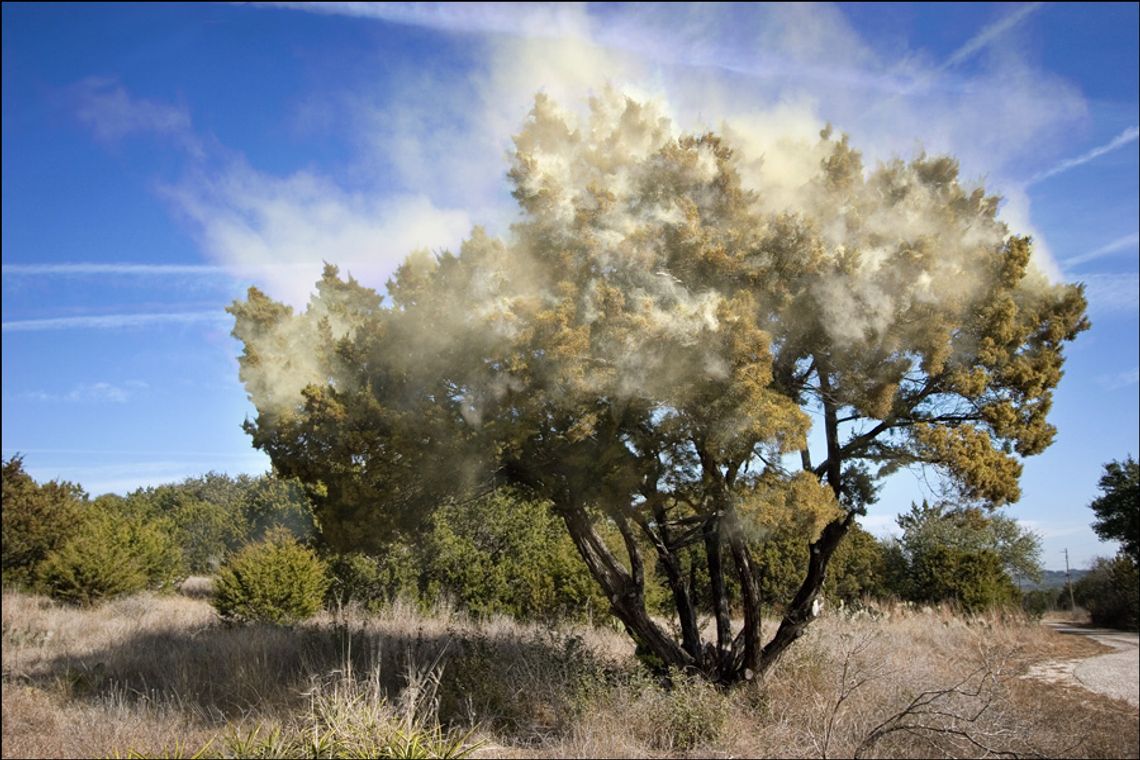
Cedar fever is a seasonal reality for many Central Texans this time of year, caused by pollen from the mountain cedar, also known as Ashe juniper. Unlike most trees that pollinate in spring, Ashe juniper releases its pollen in winter, typically after warm spells followed by cold fronts, sending dense clouds of pollen into the air.
Cedar fever symptoms often resemble a severe cold or sinus infection, but they are allergy-related and typically do not include a true fever.
Common symptoms include persistent sneezing, nasal congestion, sinus pressure, headaches, itchy or watery eyes, sore throat and fatigue.
PLEASE LOG IN FOR PREMIUM CONTENT. Our website requires visitors to log in to view the best local news.
Not yet a subscriber? Subscribe today!